
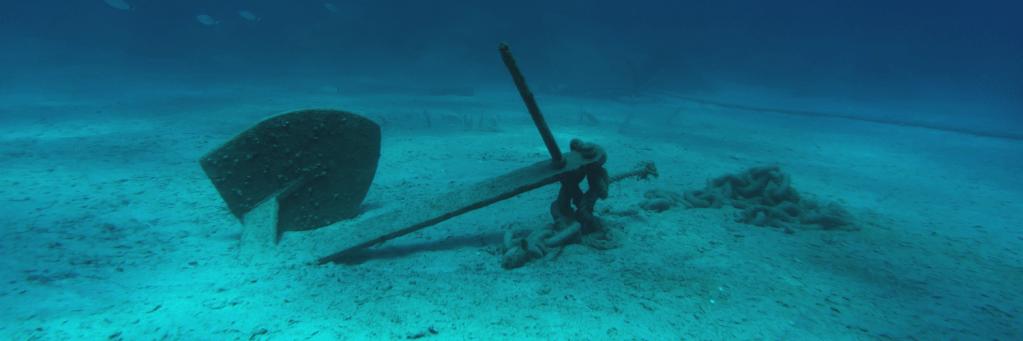
Relaunching your work and life in a more meaningful and impactful direction can involve a painful process of leaving behind what no longer serves you. That’s where so many of us get stuck.
It’s what economists call sunk costs. In business decision-making, a sunk cost is a cost that has already been incurred and cannot be recovered.
In our individual lives, a sunk cost could be the investment in a college or graduate school degree that provided you with the credentials to do work that you now find unsatisfying and unfulfilling. Or the purchase of a house that at one point gave you a sense of safety and respectability, but now feels like an anchor around your neck, keeping you stuck in place with a monthly mortgage payment that that limits your ability to be flexible and pursue new options.
Sometimes a sunk cost may be an emotional commitment to a person, place or idea that no longer serves you or encourages your growth. You’re hanging on out of a sense of loyalty because it’s just too hard to suffer the pain of letting go of a relationship, a community or a belief that you’ve invested so much of yourself in.
In an episode of his podcast Akimbo, author and marketing visionary Seth Godin talks about how our past gets in the way of our future all the time. “It keeps us from getting to what we want to do next.”
Godin uses the term “cruft” to refer to sunk costs in our lives. Cruft is a jargon word for anything that is left over, redundant and getting in the way.
The origin of the term is uncertain, he says, but may be derived from Harvard University’s Cruft Laboratory (built in 1915 as a gift from a donor named Harriet Otis Cruft), which was the Harvard Physics Department’s radar lab during World War II. As late as the early 1990s, unused technical equipment could be seen stacked in front of Cruft Hall’s windows. According to students, if a place filled with useless machinery is called Cruft Hall, the machinery itself must
be cruft.
Cruft can take many forms in our lives. I spent some time recently cleaning out a seldom used filing cabinet drawer in my on-going quest to down size our “stuff” and better organize our office and work space. Nothing stored in that drawer was useful for moving our lives forward today. But there was still a painfulness to the process of pitching all those papers in the trash bin because they reminded me of long ago work assignments and professional interactions
from a time in my life when I made more money and felt like I was having a greater impact.
Cleaning out cruft sometimes means processing through a ton of unsettling emotions dredged up from the past that need to be dealt with and put to rest. Opening a new chapter in our stories means bringing closure to the ones that came before.
Cruft can also take the form of fear of disapproval or rejection from our family or tribe. “What will people say if I do this?” We humans are herd creatures. We want to place ourselves firmly in the middle of the group where we’ll get the least criticism. To go against the flow and strike out on a new path means often threatens those around you who may be dealing with their own emotions and desires to do the same, but who lack the courage to begin the journey.
Acknowledging sunk costs but then moving on when those sunk costs no longer serve our greater purpose can leave us feeling like quitters. But as Godin points out, we humans quit things all the time when they no longer contribute to where we’re headed. We invested time in many interests and activities in our lives, especially when we were younger, that we quit and moved on from as our focus became clearer.
“Winners are the ones who quit all the time,” says Godin. They recognize that time and resources are limited, and they focus their efforts in one or two specific areas to truly have impact.
Make new decisions based on what matters to you most, not based on guilt or remorse over what you’ve invested in before. Those sunk costs have served you well to get you to the place where you are. That investment has not been wasted. Use the self-awareness and knowledge you’ve gained to build what’s next in our life.
Where do you see sunk costs holding you back in launching your second-act career? How are those costs holding you back from doing what’s most meaningful to you now?
 Transition to Thrive
Leave a comment